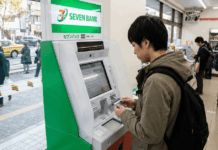

Seven Bank cards are one of the first things foreign residents hear about after landing in Japan. And for good reason: the bank lets you open an account at a 7-Eleven ATM using just your residence card.
But the account you open at that ATM comes with a catch. You get a plain cash card. No debit function. If you want the JCB debit card, you need to apply separately online or by mail.
This guide is for foreign workers and students who want to set up a functional Seven Bank debit or credit card without the runaround. If you need to pay rent, shop online, or send money home, you need to know which card does what and how to get the right one from the start.
Can You Open a Seven Bank Account in Your First 6 Months?
Under the Foreign Exchange and Foreign Trade Act, foreign residents are classified as non-residents for their first 6 months in Japan, and during this period, Seven Bank is one of only three banks (alongside JP Bank and Suruga Bank) that allows account opening.
Customers who have been in Japan for less than 6 months must prepare proof of employment alongside their Zairyu Card. So yes, you can open an account early, but you need that extra document.

What Counts as Proof of Employment?
A payslip from your employer or a letter confirming your job works. Students can use their enrollment certificate or school ID.
The point is that Seven Bank wants evidence you have a reason to be receiving and spending money in Japan, not just passing through.
The 6-Month Trap Nobody Mentions
I think the popular advice to "just open a Seven Bank account at the ATM" misses something that costs new residents weeks of frustration.
An account opened at a Seven Bank ATM only issues a cash card without Debit Card Service, with the standard design. If you want the JCB debit function, you need to apply separately online.
That second application takes another one to two weeks. So a new arrival who follows the standard advice ends up waiting a month before they can pay for anything online.
Seven Bank Debit Card vs. Credit Card: Which One Do Foreigners Get?
Seven Bank's debit card is a JCB-branded card tied directly to your account balance. It has no issuance fee and no annual fee, and it returns up to 1.0% in points. Every purchase pulls straight from your deposited funds.
The credit card is a different product entirely. Seven Bank's joint venture Credd Finance launched the Sendy Credit Card in August 2020, a JCB credit card available to non-Japanese residents with work-eligible visa statuses.
The Sendy Credit Card has an annual fee of ¥1,000 (before tax) and is cardless, meaning no physical plastic card is issued.
Who Gets Approved for the Sendy Credit Card?
The Sendy Credit Card is available to non-Japanese residents who hold residence statuses permitting work in Japan. Student visa holders without work authorization are excluded.
You apply through APLUS agent locations in Tokyo (Ueno) and Nagoya, not through Seven Bank's website directly.
Debit or Credit: Which Should You Pick?
For most foreign residents, the debit card does the job. The credit card only makes sense if you need a credit line or want to build a Japanese credit history.
| Feature | Seven Bank Debit (JCB) | Sendy Credit Card (JCB) |
|---|---|---|
| Annual fee | ¥0 | ¥1,000 + tax |
| Physical card | Yes | No (cardless) |
| Eligibility | Any resident with account | Work visa holders only |
| Points | Up to 1.0% | Varies |
| Online shopping | Yes | Yes (via smartphone pay) |
| Cash advance | No | Yes (with approval) |
How to Apply for a Seven Bank Card the Right Way
Any individual residing in Japan can apply for a Seven Bank account, regardless of nationality or age. But the application method you pick determines which card you walk away with.
ATM Account Opening
Walk into a 7-Eleven. Tap "Other services," then "Account opening/Update personal info," select "Seven Bank," and tap "Open Account (Foreigners)."
You scan your Zairyu Card, enter your details, and wait about two weeks for the cash card to arrive by registered mail. Quick, but limited: no debit function, no card design choice.
Online Account Opening
Go to Seven Bank's English application page and complete the form. Upload images of your Zairyu Card and passport. You pick your card design and choose whether to add the JCB debit function at the same time.
I would pick the online route over the ATM every time, specifically because it lets you add debit service from day one. The ATM method forces a second application later if you change your mind.
Documents You Need Ready
Seven Bank keeps the paperwork short compared to megabanks like MUFG or Mizuho. Prepare these before starting:
- Zairyu Card (Residence Card): the primary ID for every application method
- Passport: for name verification and spelling confirmation
- Japanese phone number: needed for identity verification via SMS or call
- Proof of employment or enrollment: required if you have been in Japan less than 6 months
- Email address: application status updates arrive here
No hanko (personal stamp) is needed. Seven Bank accepts handwritten signatures from foreign applicants.
ATM Network and Daily Banking After Setup
Seven Bank ATMs are located in over 27,000 7-Eleven stores nationwide and at select Ito-Yokado, Sogo, and Seibu department stores. Most operate 24/7.
Multilingual Support
ATM screens support 9 languages: Japanese, English, Tagalog, Chinese, Portuguese, Spanish, Vietnamese, Indonesian, and Thai. The contact center also handles inquiries through multilingual operators. Few Japanese banks offer Tagalog or Indonesian.
What About Using Your Card Overseas?
JCB acceptance outside Japan and parts of Asia is thin. If you travel to Europe or the Americas, JCB will leave you stuck at most retailers. My take is that relying on Seven Bank's JCB debit as your only card for international travel is a mistake.
A Wise or Revolut card paired alongside it solves the network gap. Foreign cards on Japanese apps like Mercari or PayPay are aggressively blocked, and a local card like Seven Bank's debit fixes this.
Fees, Limits, and the Fine Print
Seven Bank ATM withdrawal fees for international cards run ¥110 to ¥220 per transaction, with a daily withdrawal cap of ¥300,000. Your home bank may stack its own fee on top.
For domestic account holders using their own Seven Bank card, ATM withdrawals within 7-Eleven are free during standard hours. Transfers to other banks carry standard interbank fees.
Account Maintenance After Visa Changes
Your Seven Bank account is tied to your residency status. If your visa expires and you do not renew, Seven Bank may freeze your account and card services.
After renewing your visa, bring the updated Zairyu Card to update your records. Do not wait for the bank to reach out. They will freeze first and ask questions later.
Remittance Services Through Seven Bank
Seven Bank runs an international money transfer service called Sendy through its subsidiary Seven Global Remit. Transfers go to countries across Asia, South America, and parts of Europe.
The remittance service is separate from your debit or credit card.
You register for it after opening your account, and it requires its own KYC steps to comply with Japan's anti-money laundering regulations. Expect extra identity verification documents and processing time on your first transfer.
Questions People Ask About Seven Bank Cards for Foreigners
Answers to the most common questions foreign residents search for about Seven Bank accounts and cards in Japan.
- Q: Can I open a Seven Bank account as a tourist?
No. Seven Bank requires residency under the Foreign Exchange and Foreign Trade Act. Tourist visa holders and short-stay visitors cannot open accounts. The ATM service for foreign-issued cards is separate from having your own Seven Bank account. - Q: Does Seven Bank issue Visa or Mastercard debit cards?
Seven Bank's debit card runs on the JCB network only. If you need Visa debit, Sony Bank's WALLET card or Rakuten Bank are your alternatives. JCB works well inside Japan but has limited acceptance outside Asia. - Q: How long does it take to get my Seven Bank card after applying?
Card delivery takes about one to two weeks after approval. The card arrives by simplified registered mail to the address on your Zairyu Card. The mail cannot be forwarded, so make sure you are at that address to receive it. - Q: Can I use my Seven Bank debit card on Japanese e-commerce sites?
Yes. The JCB debit card works on most Japanese online retailers and subscription services. Platforms that reject foreign-issued cards typically accept Seven Bank's JCB debit because it is domestically issued. - Q: What happens to my Seven Bank account if I leave Japan permanently?
You should close the account before departing. An inactive account tied to an expired residence card will be frozen. Remaining funds can be withdrawn at any 7-Eleven ATM before you leave, or transferred out through the Sendy remittance service.
Conclusion
Seven Bank remains one of the easiest banks for foreigners to access in Japan, especially in the first six months. The debit card fills most daily spending needs, while the credit option through Credd Finance suits workers building local credit.
JCB's limited reach outside Asia is the one gap worth planning around before you rely on it. If you are heading to Japan soon, start with the online application and skip the ATM shortcut.
References
Seven Bank's English application page - 【For foreign nationals only (15 years or older)】Online Application | Seven Bank