
A first free loan at 0% RRSO sounds like a gift. Platforms like Vivus, Wonga, and a dozen others offer up to 8,000 PLN with zero interest for 61 days. But the second loan from those same lenders? RRSO can spike to 297%.
That gap between the promotional rate and the repeat rate is the single most overlooked number in Polish online lending. No comparison site treats it as a dealbreaker, because every comparison site earns referral fees on first-loan signups.



This article is for a specific reader: a younger adult in Poland, between 25 and 35, borrowing from a non-bank lender for the first time and assuming the promotional terms say something about the lender's cost structure. They don't.
The 0% RRSO Trap on Repeat Loans
Every major online loan platform in Poland runs the same playbook. The first loan is free. The second is expensive.
Take one representative example from early 2026: a 5,000 PLN installment loan over 36 months carried total repayment of 8,188.89 PLN at 41.80% RRSO. That same lender offered the first loan at 0%.
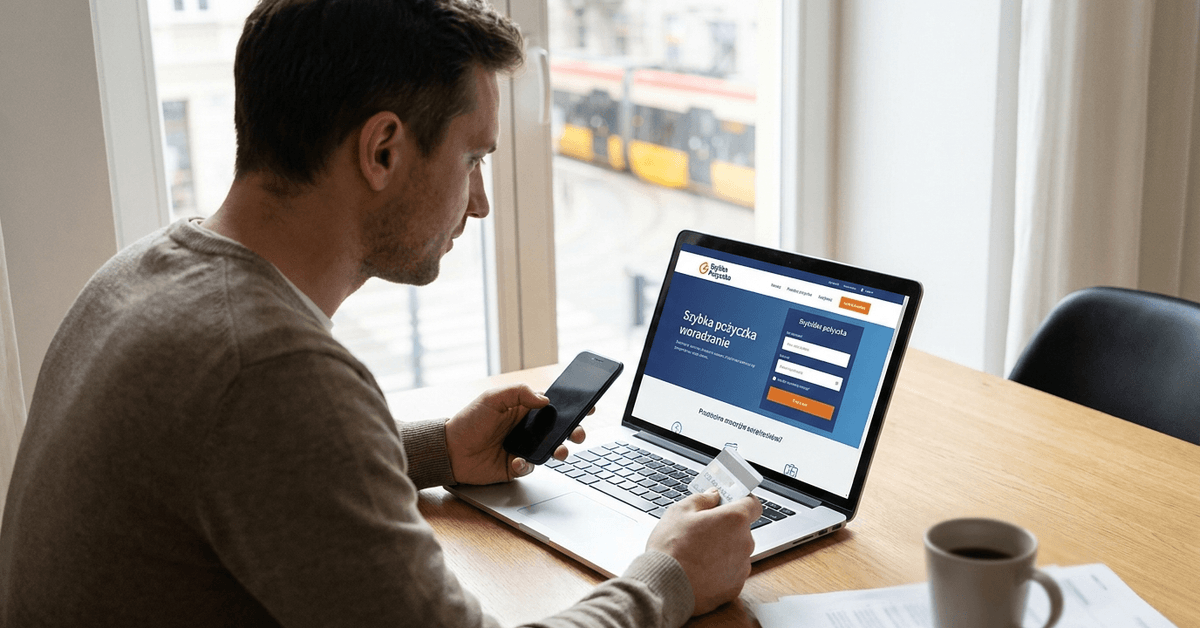
Why Every Lender Looks the Same at Zero
Comparing lenders on their first-loan offer is like comparing restaurants by their free samples. The data that matters, the cost of the second and third loan, is buried in the terms page.
I would skip the first-loan comparison entirely and start by comparing repeat-loan RRSO across platforms. That single number separates the reasonably priced lenders from the ones banking on your loyalty after the freebie wears off.
The Math After the Promotion Ends
A 1,789.84 PLN payday loan for 30 days at some Polish non-bank lenders carries an RRSO of 297.36%.
Annualized, that means every 1,000 PLN borrowed costs roughly 125 PLN per month in fees and interest. Miss the repayment deadline, and penalty charges stack fast.
How Polish Online Loan Applications Work in 2026
The process itself is fast, and that speed is part of the problem. Applications take minutes. Decisions arrive in real time.
Applicants fill out a form with basic personal data, a national ID number (PESEL), bank account details, and income information. The lender runs checks against credit databases like BIK (Biuro Informacji Kredytowej) and business intelligence registries like KRD or ERIF.
Some lenders skip BIK entirely, which sounds convenient until you realize that skipping BIK usually means higher fees.
Identity Verification Methods
Polish lenders verify identity one of three ways:
- A 1-grosz bank transfer from the applicant's personal account
- Instantor or Kontomatik integration, which reads account data through open banking
- Manual document upload, though this is becoming rare among digital-first lenders
Each method takes under five minutes. Once verified, funds land in the borrower's account within 15 minutes at many platforms.
Who Gets Rejected (and Where They End Up)
This is where the story gets uncomfortable. According to a Warsaw Enterprise Institute report from February 2026, 77% of loan applications submitted to non-bank lenders in the first half of 2025 were rejected. Nearly 2.8 million loan requests went unfunded in 2024 alone.
Those rejected borrowers don't just stop needing money. The WEI report found that Poland's gray market in non-bank lending reached approximately PLN 5.1 billion in annual turnover, representing 15% of the sector.
So the real danger of online loans in Poland isn't the interest rate. It's what happens after a rejection pushes someone toward an unregulated lender with no consumer protections at all.
What to Check Before Signing Any Loan Agreement
Polish consumer credit law requires lenders to disclose all costs upfront. But disclosure is only useful if the borrower reads it.
Three things deserve attention before signing anything:
- Total repayment amount (całkowita kwota do zapłaty): this single number shows principal plus all fees, interest, and commissions combined
- RRSO on repeat loans: the promotional 0% tells you nothing about ongoing costs
- Penalty structure for late payments: some lenders charge flat fees while others apply compounding interest daily
KNF Registration and UOKiK Protections
Every legal non-bank lender in Poland must be registered with UOKiK (Urząd Ochrony Konkurencji i Konsumentów). The KNF (Komisja Nadzoru Finansowego) supervises banks and certain financial institutions directly.
A lender not appearing on either registry is a red flag. UOKiK handles consumer complaints and has the power to fine companies for misleading advertising or hidden charges.
Borrowers also have a 14-day cooling-off period after signing any consumer credit agreement, during which they can withdraw without penalty.
Payday Loans vs. Installment Loans: A Cost Comparison
Not all online loans in Poland carry the same risk profile. The structure matters.
| Feature | Payday Loan (chwilówka) | Installment Loan (pożyczka ratalna) |
|---|---|---|
| Typical Amount | 500 to 5,000 PLN | 1,000 to 60,000 PLN |
| Repayment Period | 30 to 61 days | 3 to 36 months (some up to 120) |
| RRSO Range | 200% to 300%+ | 28% to 42% |
| First Loan at 0% | Common | Less common |
| Risk of Debt Spiral | High | Lower, but still present |
Installment loans spread cost across months, reducing the per-payment burden. But the total amount repaid can be significantly higher. A 3,000 PLN installment loan over 36 months at 41.80% RRSO could result in roughly 5,000 PLN total repayment.
I think the widespread advice to "start with a payday loan to test a lender" is backwards.
A payday loan at 0% teaches you nothing about the lender's real pricing. An installment loan, even a small one at 1,000 PLN over 6 months, shows you the actual fee structure immediately.
The Interest Rate Environment Working in Borrowers' Favor
Poland's NBP reference rate dropped to 3.75% as of March 2026, down from 5.0% in mid-2025. That matters for bank loans. Bank Millennium, for instance, was advertising an online cash loan at 8.3% APR in mid-2026.
Non-bank lenders don't follow the reference rate as closely. Their cost structure depends more on risk premiums and operational margins than on monetary policy.
But the gap between an 8.3% bank loan and a 297% non-bank payday loan is enormous. If a bank will lend to you, take the bank loan. The non-bank option makes sense only when banks won't approve the application.
When a Bank Loan Isn't Available
Polish banks run stricter creditworthiness assessments. Applicants without stable employment contracts (umowa o pracę), with existing debt, or with negative BIK entries often get rejected.
Non-bank lenders fill this gap. But borrowers in this position should borrow the minimum amount for the shortest period possible, and compare at least three lenders on their non-promotional RRSO before committing.
Questions People Ask About Online Loans in Poland
A few questions keep coming up when people research this topic for the first time.
- Q: Can foreigners get online loans in Poland?
Legal residents with a valid PESEL number, an active Polish bank account, and proof of income can apply at most non-bank lenders. Some platforms require Polish citizenship, so check eligibility criteria on the lender's site before submitting an application. - Q: Do Polish online lenders check BIK?
Some do, some don't. Lenders that skip BIK verification tend to charge higher fees to offset the added risk. A clean BIK record generally unlocks better terms and higher loan amounts. - Q: Is rolling over a payday loan in Poland legal?
Polish law restricts the total non-interest cost of consumer credit. Rolling over is technically possible at some lenders, but cumulative fees are capped. The real problem is that each rollover adds cost and extends the debt cycle, even within legal limits.
Conclusion
Poland's online lending market is fast, convenient, and built on a promotional model designed to obscure long-term costs. The 0% first loan is marketing spend, not a reflection of what borrowing will cost going forward.
Rejected applicants face a dangerous pull toward unregulated lenders operating in a PLN 5.1 billion gray market. Borrow carefully, compare repeat-loan rates, and verify every lender's registration with UOKiK before signing anything.