
A 20-hour work week that covers rent without wrecking your exam schedule. That's the dream for students hunting barista jobs in Spain right now.
Starbucks barista jobs in Spain show up on every job board in Madrid and Barcelona. The brand pulls applicants in. But the experience changes depending on which type of store hires you.


Franchise-operated and company-managed Starbucks locations in Spain offer different benefits, schedules, and promotion paths. The store ownership type shapes your daily work more than the green apron does.
Everything below covers shifts, pay conditions, the application process, and why your contract type on the Seguridad Social record can matter more than the brand name on your CV.
What Starbucks Barista Shifts Look Like in Spain
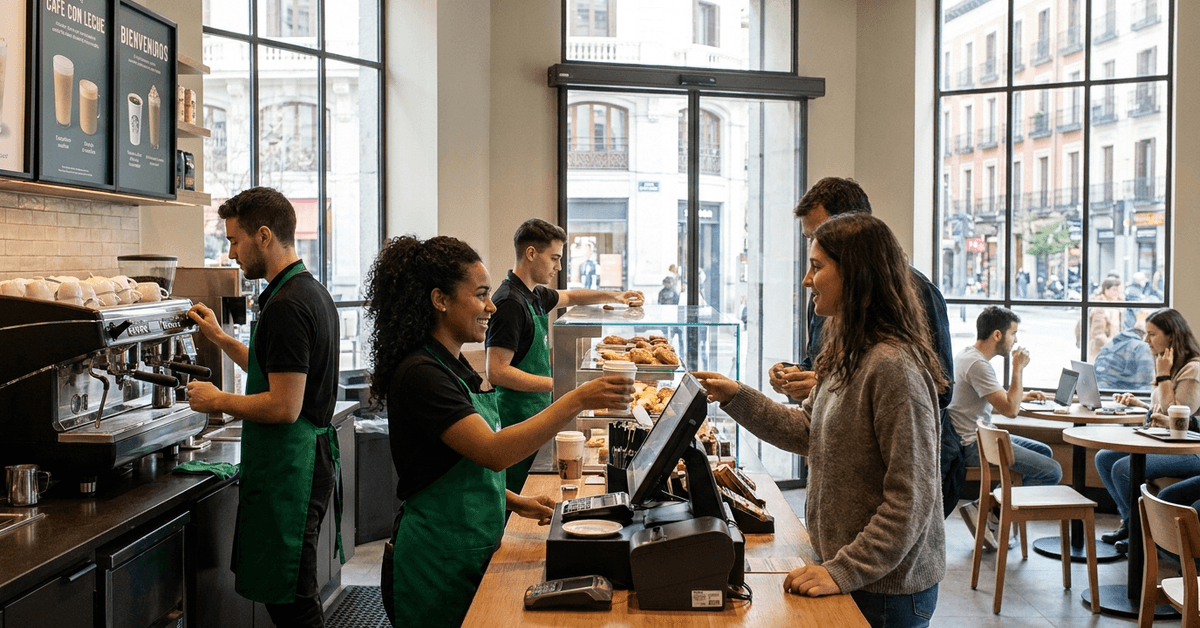
The mental image of a barista job is usually someone making lattes for six hours. The daily reality at Starbucks involves a lot more movement than that.
Tasks Beyond the Espresso Machine
A barista shift includes cleaning stations, restocking supplies, opening or closing registers, and running local in-store promotions. The espresso machine is maybe 40% of the job.
Communication comes up constantly. Stores in Madrid and Barcelona serve international customers, so speaking both Spanish and English becomes a functional part of the role.
Some stores near tourist zones lean on English almost as heavily as Spanish during peak hours.
Teamwork fills the rest. During a morning rush or late-afternoon wave, baristas rotate between stations. The team dynamic either makes or breaks your shift quality, and that changes week to week depending on who's scheduled with you.
Schedule Flexibility and Its Limits
Starbucks barista schedules in Spain typically change every week through a rotating roster system. Part-time positions attract students because managers can adjust hours around class schedules. That flexibility has a cost, though: predictability drops.
Some weeks get packed with shifts. Others go quiet. Open communication with your store manager helps set expectations, but last-minute changes do happen.
If a consistent Monday-through-Friday routine is what keeps you sane, a weekly-rotating roster might feel chaotic.
I think this scheduling model suits students at universities like Universidad Complutense or UAB better than students with fixed lab schedules, because those rotating hours work only when your academic calendar is flexible enough to absorb the changes.
Starbucks Barista Benefits in Spain
Pay is one part of the package. The benefits and conditions attached to Starbucks barista jobs in Spain round out the picture in ways that vary more than people expect.
Discounts, Drinks, and Meal Vouchers
The standard benefit set for Spain-based baristas includes a few tangible perks worth knowing about:
- Meal vouchers provided during shifts, reducing your daily food cost
- Product discounts on food and beverages, reported at up to 30% off
- A complimentary drink per shift, which sounds small but saves around €3-4 daily
- Transport assistance at some locations, depending on contract type and store policy
Health insurance may be included for full-time or longer-term staff. The keyword there is "may." Contract type and store ownership model both affect whether a benefit shows up in your package or not.
Training Programs That Transfer to Other Jobs
Starbucks runs structured training programs for new hires, even those with zero hospitality background. Baristas pick up cash handling, customer service protocols, and basic leadership skills during their first weeks.
Those skills transfer. Cash handling experience applies to any retail job. Customer service training translates directly into hotel front desk work, call center roles, or event management.
I would rank the Starbucks training program above what a typical independent café in Barcelona offers, specifically because the structured curriculum covers conflict resolution and team coordination, not just drink recipes.
The training also feeds into promotion opportunities. Starbucks favors internal promotion for shift supervisor and regional-level roles.
Progression depends on timing, store location, and available openings, so there is no guarantee. But the pathway exists, and it starts during training.
Franchise vs. Company-Managed Starbucks Stores in Spain
This is the detail that almost no Starbucks barista job guide covers. And it changes everything about the experience.
Why the Store Type Shapes Your Entire Experience
Starbucks locations in Spain operate under two models: company-managed stores run directly by Starbucks, and franchise stores run by independent operators licensed to use the brand.
The difference affects benefits, management style, and even your contract terms.
| Factor | Company-Managed Store | Franchise Store |
|---|---|---|
| Benefits package | Standardized: meal vouchers, discounts, transport help | Varies by franchise owner's policies |
| Promotion paths | Clear internal ladder to supervisor and regional roles | Limited to franchise owner's operation size |
| Contract type | More likely to transition to indefinite after probation | Higher chance of repeated fixed-term renewals |
| Management culture | Corporate standards applied uniformly | Depends entirely on the franchise operator |
The takeaway: two baristas wearing the same apron in the same city can have completely different employment conditions based on store ownership type alone.
Ask during your interview whether the store is company-managed or franchise-operated. That single question tells you more about your future work life than any job listing will.
The Application Process for Starbucks Barista Jobs in Spain
Landing a barista position follows a fairly standard path, but a few details separate successful applicants from the pile.
Application Requirements and Steps
Applicants need working-level Spanish and ideally some English. A legal right to work in Spain is mandatory, and proof of this may be requested early.
Prior hospitality experience helps in competitive markets like Madrid and Barcelona, but Starbucks does not require it.
The application process works like this:
- Go to the Starbucks Spain careers page and search for barista openings by location
- Complete an online profile and upload a current CV
- Add a short cover letter explaining your interest and any relevant qualities
- Wait for an interview invitation, which can take anywhere from one week to one month depending on location and application volume
Following up after two weeks is reasonable if you haven't heard back. Stores in smaller cities tend to respond faster than flagship locations in Madrid or Barcelona.
What the Interview Focuses On
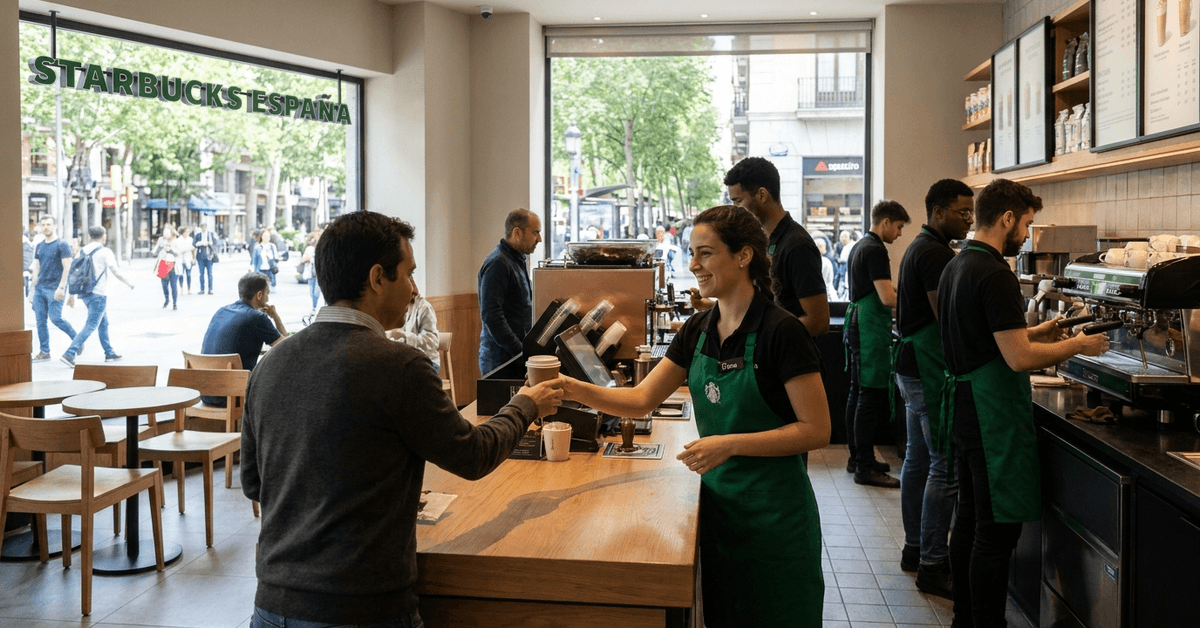
Starbucks interviews lean heavily on soft skills. Expect questions about handling pressure, resolving difficult customer situations, and working within a team under time constraints.
Technical coffee knowledge barely comes up. The interviewer cares more about how you describe a stressful interaction than whether you know the difference between a cortado and a flat white.
A direct, friendly approach tends to work better than rehearsed answers, since the interview style varies based on the store manager running it.
Contract Types and Your Seguridad Social Record
A practical angle that job guides skip: how the contract registered on your vida laboral affects your career long after you leave Starbucks.
Fixed-Term vs. Indefinite Contracts in Spain
Barista contracts in Spain come as either fixed-term (temporal) or indefinite (indefinido). Each type has different implications for Social Security contributions, access to public health services, and how future employers view your employment history.
All legally employed baristas get registered with Spanish Social Security, which provides access to public health coverage and unemployment benefits. Income tax is deducted directly from pay, and the breakdown appears on your monthly pay slip.
I disagree with the common advice that a Starbucks brand name on your CV carries automatic weight. The contract type on your Seguridad Social vida laboral record tells Spanish employers more about your reliability than any logo.
A string of 3-month fixed-term contracts looks worse on a vida laboral than a single 12-month indefinite contract at a smaller café, because HR departments pull that record and read the contract durations first.
This is why asking about contract type during the interview stage matters. If a franchise store plans to cycle you through 3-month renewals indefinitely, that information should factor into your decision.
Company-managed stores are more likely, though not guaranteed, to transition baristas from fixed-term to indefinite status after an initial probation period.
Work Permits for Non-EU Applicants
Candidates from outside the EU need valid work permits before starting. Starbucks requires all documentation upfront, and the timeline for processing can stretch during peak hiring seasons. Contacting HR directly about specific requirements is worth the effort, especially if your permit situation involves any unusual conditions.
Questions People Ask About Starbucks Barista Jobs in Spain
Q: Do Starbucks baristas in Spain get health insurance? Health insurance is available for full-time and longer-term staff at many locations. The coverage depends on your contract type and whether the store is company-managed or franchise-operated, so confirm the details during your hiring process.
Q: How much do Starbucks baristas earn in Spain? Barista pay in Spain follows the hospitality sector wage structure, which is tied to the convenio colectivo for your region. The exact amount varies by city, contract type, and hours worked, so check your regional labor agreement for specific numbers.
Q: Can I work at Starbucks in Spain as a foreign student? A valid student visa with work authorization is required. EU citizens can work freely, but non-EU students need to verify that their visa permits part-time employment before applying. The process is standardized but timelines vary.
Q: Is previous barista experience required to apply? No. Starbucks provides training for new hires without hospitality backgrounds. Having experience helps in competitive markets like Barcelona, but the application process is open to beginners.
Q: How long does the Starbucks Spain hiring process take? The timeline runs between one week and one month. Stores in smaller cities tend to process applications faster. Following up after two weeks without a response is reasonable and expected.
Conclusion
The contract type behind your Starbucks apron shapes your benefits more than the brand itself. Asking whether a store is franchise or company-managed changes what information you have to work with.
Students who treat the barista job as a strategic career step, not just a paycheck, get more from the experience. Check the Starbucks Spain careers page this week if a part-time opening in your city fits your schedule.