

That letter arrived. Or maybe it didn't, and the EBT card just stopped working at the register.
SNAP benefits getting suspended feels personal, even when the cause is a missed form or a skipped interview. The fix is often simpler than the panic suggests. But the timeline for responding matters far more than the response itself.



Every step here follows current SNAP program rules and appeal rights available to recipients in 2026.
Why SNAP Cases Get Suspended in 2026
A SNAP suspension doesn't mean someone did something wrong. Cases get paused for administrative reasons constantly, and the cause is often paperwork timing rather than an eligibility problem.
Recertification Deadlines and the Mail Problem
The single biggest reason for SNAP suspensions is a missed recertification deadline.
Every SNAP household has to re-prove eligibility on a schedule, typically every 6 or 12 months. The state sends a form, the recipient fills it out, and sometimes an interview is required.
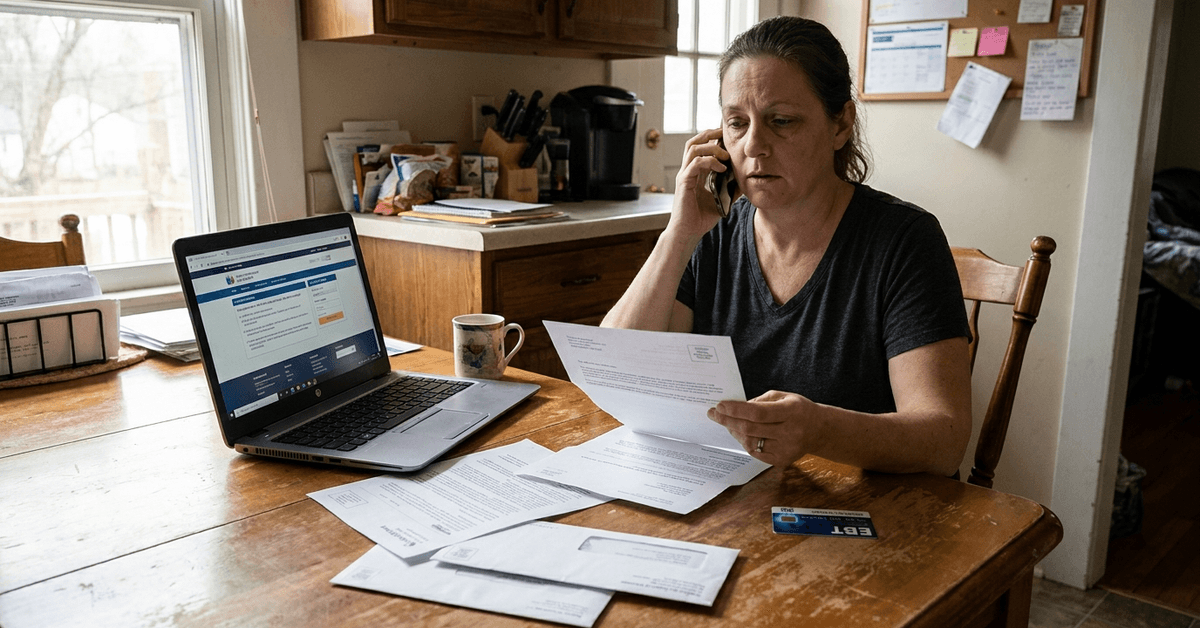
That notice sometimes arrives late, gets lost, or lands in a stack of mail during a chaotic week. One missed deadline triggers an automatic suspension. No phone call warning. No grace period in most states.
I think the recertification system through USDA SNAP is the weakest part of the entire program, because it relies on physical mail delivery to people whose housing situations change frequently.
A system built for stability is serving a population defined by instability. That mismatch creates most of the suspensions I see discussed online.
Unreported Household or Income Changes
A new job, a roommate moving out, a child turning 18: these changes all affect SNAP eligibility calculations. Recipients are required to report them within a set window, usually 10 to 30 days depending on the state.
A lot of people delay reporting a new income source because they worry the benefit amount will drop. That instinct is understandable.
But the system catches up. And when it does, the result is often a suspension paired with an overpayment notice, which means the recipient owes money back.
This is the part that frustrates me about SNAP program design: it punishes delayed honesty more severely than it rewards prompt reporting. Someone who reports a new $200/week part-time job right away might see a small reduction.
Someone who waits three months might lose benefits entirely and face a repayment demand. The incentive structure runs backward.
Documentation Errors and Flagged Cases
Sometimes a suspension has nothing to do with the recipient's actions at all. Incomplete paperwork on the agency side, a name mismatch in the system, or a flagged Social Security number can trigger a hold without any wrongdoing.
Fraud investigations account for a small percentage of suspensions. Even innocent errors or unverifiable information can pause a case during a review period that drags on for weeks.
What to Do After a SNAP Suspension Notice
The first 48 hours after a suspension matter more than people realize. The reason comes down to one thing: fair hearing deadlines.
File a Fair Hearing Request Before Calling the Office
I disagree with the standard advice to "call your local SNAP office first."
Filing a fair hearing request should come before the phone call, because the hearing request has a strict state deadline (often 90 days from the notice date, but sometimes as short as 10 days for continued benefits) while the phone call has no deadline at all.
A fair hearing is a formal right under federal law. Every state must offer one. The recipient presents their side, and an independent reviewer re-examines the agency's decision.
Filing this request quickly, especially within 10 days of the suspension notice, can sometimes keep benefits active during the review process.
The phone call to the SNAP office can happen anytime. But too many people spend days trying to get through on a busy phone line, and by the time they connect, the window for requesting continued benefits has closed.
Organizations like Legal Services Corporation fund local legal aid offices that handle SNAP benefit disputes at no cost. For complex cases or confusing notices, these offices can help draft the hearing request itself.
Review the Suspension Letter Closely
The suspension notice, if it arrived, contains the specific reason for the case pause. It also lists deadlines and instructions for responding.
A missing letter is worth mentioning during the fair hearing or office visit. Agencies are required to send written notice before or at the time of suspension. A missing notice can strengthen a case during an appeal.
Gather Documents That Match the Specific Issue
Pulling together the right paperwork depends entirely on the suspension reason. A general list of what to prepare:
- Proof of income: recent pay stubs, employer letters, or tax documents covering the period in question
- Proof of address: utility bills, lease agreements, or official mail showing current residence
- Identity verification: state ID, Social Security card, or birth certificate
- SNAP correspondence: letters, emails, notes from phone calls with dates and names of caseworkers
A folder with these documents, physical or digital, cuts the resolution time significantly. Caseworkers process cases faster when the supporting evidence is organized and matches the specific flag on the account.
Find Food Resources During the Gap
A suspension can last anywhere from a few days to several weeks. During that time, local options can cover the gap:
- Food pantries: most communities operate at least one, and many require no income verification
- Community meal programs: churches, shelters, and community centers often run free meals on rotating schedules
- Emergency food assistance: some states offer crisis grants or expedited SNAP processing for households with zero income and less than $150 in liquid assets
- 2-1-1 hotline: dialing 211 connects callers to local social services including food resources
These resources are temporary, but they remove immediate pressure while the SNAP case gets resolved.
Keeping SNAP Benefits Active Long-Term
Suspensions are often preventable. The habits that protect a SNAP case are simple. Execution is where things fall apart, because forms don't feel urgent until they are.
Calendar Alerts for Every Recertification Deadline
The recertification date is printed on the approval letter. Setting a phone reminder 30 days before that date, and another one 7 days before, creates a buffer for gathering documents and scheduling interviews.
I would set three separate calendar alerts for USDA SNAP recertification deadlines: 30 days out, 14 days out, and 3 days out.
Missing a deadline by even one day can trigger the suspension process automatically, and most states offer no built-in reminder system beyond a single mailed notice.
Report Changes Fast, Even Small Ones
The reporting window in most states is 10 days from the date of the change. A quick call or online update through the state's benefits portal takes minutes. Waiting creates risk that compounds over time.
A common mistake: assuming that a change "doesn't matter" because it seems small. A household member's part-time job, a child aging out, or a temporary increase in hours can all shift the benefit calculation.
Reporting immediately protects the case, even if the benefit amount adjusts slightly downward.
Keep Copies of Everything Sent to the Agency
Paper trails matter when disputes arise. Every form submitted, every document mailed, and every phone call made should be logged with a date. A simple notebook or phone note works fine.
If a caseworker says something was never received, a dated copy of the mailed document changes the conversation entirely. Some recipients photograph or scan documents before sending them. Low effort, high protection.
| Action | Calling the SNAP Office | Filing a Fair Hearing |
|---|---|---|
| Deadline | No formal deadline | 10-90 days depending on state |
| Can keep benefits active? | No guarantee | Possible if filed within 10 days |
| Formality | Informal phone inquiry | Legal right with written process |
| Best used for | Simple questions, quick fixes | Disputed decisions, incorrect suspensions |
A phone call and a fair hearing request are not interchangeable: filing the hearing request protects legal rights that a phone call cannot touch.
Questions People Ask About SNAP Benefits Suspended
Q: How long does a SNAP suspension last? The timeline depends on the reason and how fast documentation is submitted. Simple recertification issues can clear up in a few days, while eligibility disputes or fraud reviews sometimes stretch to several weeks. Calling the local office for a case-specific estimate is the fastest way to get a real timeline.
Q: Can suspended SNAP benefits be reinstated? Most suspensions are temporary. Once the missing documentation is provided or the agency clears the issue, benefits typically restart. Some states issue retroactive benefits for the suspension period if the case is resolved in the recipient's favor.
Q: Does a SNAP suspension affect Medicaid or housing assistance? A SNAP suspension alone does not automatically affect Medicaid, TANF, or housing assistance. But the income or household change that triggered the SNAP issue might affect other programs too. Checking each program's status separately after a SNAP suspension is a smart move.
Q: Can I reapply for SNAP after a suspension? A suspension is different from a disqualification. Suspended cases can usually be reopened once the issue is resolved, without starting a brand-new application. Disqualifications for fraud carry specific penalty periods that vary by state and offense.
Q: Do I need a lawyer for a SNAP fair hearing? No attorney is required. Fair hearings are designed so recipients can represent themselves. But free legal aid through local Legal Services Corporation offices can help with complicated cases, and they handle SNAP disputes regularly.
Conclusion
SNAP suspensions hit hardest when the cause is unclear and the next step feels invisible. The fair hearing deadline is the single number worth remembering from this entire article.
A phone call starts a conversation, but a hearing request starts a legal protection. File that first, gather documents second, and the rest becomes much simpler to manage.