

Managing everyday grocery spending often comes down to using the right payment method. For shoppers who frequent Aldi, understanding how credit cards work in-store—and if rewards can really add up—is worth a closer look.
This article is for anyone who visits Aldi regularly, wants to simplify payments, and hopes to find practical ways to earn rewards—maybe not as much as some imagine, but possibly enough to make a difference over time.



Can You Use Credit Cards at Aldi?
Aldi accepts a variety of credit cards today, though this wasn’t always the case. Previously, many stores only allowed cash, debit, or specific cards.
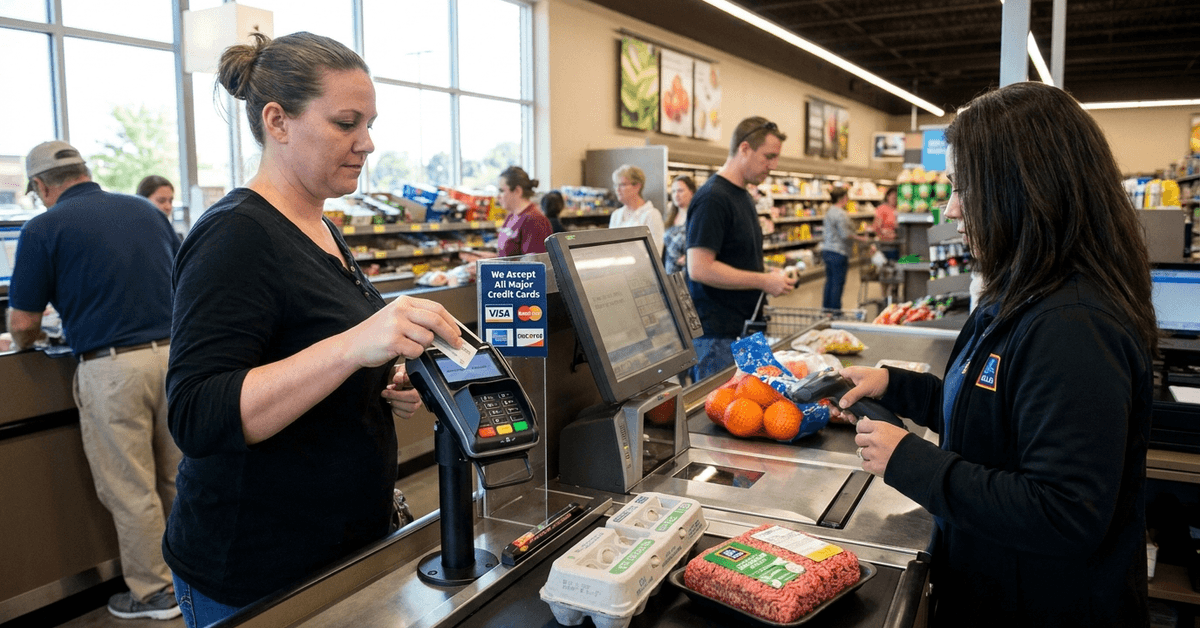
Now, most Aldi locations in the US, UK, and Australia take Visa, Mastercard, Discover, and American Express.
This offers more flexibility than before. But, not every alternative payment—like Diners Club—will work, and acceptance may vary in smaller or non-chain Aldi markets.
Which Credit Cards Work Best for Aldi?
With so many card options, it’s natural to ask which credit cards might be the most beneficial at Aldi. There isn’t an Aldi-branded credit card (as of this writing).
So, shoppers often use cards with strong grocery cash back or general rewards. While it sounds easy, actual results usually depend on your card’s earning category and how Aldi is coded by your issuer.
General Cash Back Cards
Cards like the Citi Double Cash or Capital One Quicksilver offer a predictable 1.5% to 2% back everywhere, including Aldi. There’s rarely any restriction. That’s a safe bet, especially for those who want simplicity over chasing categories.
Cards with Grocery Bonus Categories
Some cards—like the American Express Blue Cash Preferred or the Chase Freedom Flex—offer higher cash back (sometimes up to 6%) at grocery stores.
However, there’s a catch: not all credit card networks classify Aldi as a “supermarket” or “grocery” for bonus rewards. It may fall under a generic retail category, which earns a lower rate even if it feels like groceries to you.
Specialty Rewards or Rotating Categories
Occasionally, category cards (like Discover it or Chase Freedom) include “grocery stores” as a 5% cash back category for a quarter of the year. It’s tempting—but, once again, eligibility depends on whether your specific Aldi store codes correctly.
Checking with your card provider or reading user reports can help, although the answer is rarely crystal clear.
How Does Aldi’s Payment System Affect Credit Card Rewards?
A lot of shoppers assume any card they use at a grocery store, including Aldi, will register as a grocery purchase for higher rewards.

Reality can be more complex. Aldi may use payment processing codes considered “discount retail” rather than strictly “supermarket.”
This subtle difference sometimes reduces the rate your card will pay out. Unfortunately, there’s no public list of how each card company codes Aldi purchases. The safest way is to test a small purchase yourself or ask your bank.
Tips for Verifying Reward Category Coding
Checking how your purchases are categorized helps ensure you receive the rewards you expect. A few simple steps can help you verify whether your Aldi purchases qualify for bonus rewards.
- Check your card provider’s online portal after an Aldi purchase to see how it was categorized.
- If you don’t see bonus rewards after a week, your store may not be coded as grocery.
- Contact customer service to ask about recent qualifying purchases.
- Search points forums (like Reddit’s r/CreditCards) for real-life user reports.
Comparing Aldi to Other Grocery Stores for Credit Card Payments
Some shoppers wonder whether Aldi is better or worse, from a rewards perspective, than competitors like Walmart, Target, or local chains.
Aldi’s low prices are appealing, but earning high credit card rewards might be a bit less straightforward than at, say, Kroger or Publix—where bonus categories always apply.
Main Differences
Understanding merchant categories can help you maximize your credit card rewards. Different retailers may be classified differently by card issuers.
- Chains like Walmart and Target are usually classified as “superstores,” rarely qualifying for grocery bonuses.
- Traditional groceries tend to reliably trigger bonus category rates.
- Aldi falls somewhere in the middle: often “grocery,” sometimes “discount retail.” Consistency isn’t guaranteed.
Strategies to Maximize Payments and Rewards at Aldi
Even if some cards don’t offer high bonus rates at Aldi, there are a few ways regular customers can get more mileage from their credit card usage. Most of these don’t require drastic changes—just attention to detail and an openness to experiment.
Try Out Multiple Cards
If you hold a couple of rewards cards, consider testing each one at Aldi for a month or so. Sometimes, an unexpected card offers the best rewards rate—often due to how the payment system classifies the purchase.
Link to a Digital Wallet
Aldi widely supports Apple Pay, Google Pay, and Samsung Pay, connected to a major credit card. Some digital wallets occasionally offer their own bonuses, especially for first-time users. A quick check in your app before shopping can reveal easy deals.
Combine with Store Promotions
Aldi doesn’t have a loyalty program in most markets, but seasonal discounts and weekly specials can be paired with your credit card’s cash back or points to maximize overall value—even if credit card rewards aren’t huge on their own.
Set Account Alerts
To track small but accumulating cash back or points, set up alerts in your credit card account dashboard. This helps monitor actual earnings and keeps you motivated to shop efficiently.
Other Smart Ways to Pay at Aldi
Credit cards aren’t the only way to make Aldi checkout smooth. Some shoppers find value in alternative methods—perhaps not in rewards, but in simplicity or budgeting control.
Debit Cards (with Cash Back Option)
Using a debit card provides a quick, low-maintenance payment. Some banks include light cash back features on debit purchases, which can supplement your overall rewards plan.
Gift Cards
Aldi gift cards, sometimes given as presents or rewards by outside apps, can streamline shopping and help manage grocery budgets.
While you likely won’t earn credit card points buying Aldi gift cards in-store, using them in tandem with credit for larger trips is possible.
Understanding Fees, Security, and Good Payment Habits
Aldi doesn’t add surcharges for card payments at checkout in major markets. That’s a relief for those who want to earn rewards without losing savings to fees.
Still, practicing good credit card habits is crucial. It’s easy to lose track and end up paying interest, which can erase any reward benefit you’ve earned.
Stay Secure with Digital Payments
Contactless payments—available at most Aldi locations—provide added security versus swiping a card. Plus, cards like Visa and Mastercard include zero-liability protections, another reason to lean into digital wallets if you’re concerned about safety.
Watch for Transaction Errors
Sometimes, a self-checkout terminal or scanner might read your card incorrectly, or process a transaction multiple times.
It’s usually resolved quickly, but checking your bank statement after a big shop helps catch errors early. Not fun, but understandably important.
Conclusion: Making Credit Cards Work at Aldi
Credit cards can make Aldi payments faster and more flexible. The best rewards depend on how each purchase is categorized. Small cashback earnings may still add value over time. Focus on total grocery savings rather than rewards alone.